
DataPipeline 10.1 includes new methods for working with arrays, collections, and filters. It adds Excel support for styling, hyperlinks, and configurable formula error handling. It improves data type detection and adds JDBC-backed dataset caching. It also adds DDL and DML code generation for the H2 Database. As well as new S3 operations.
Category Archives: Data Pipeline
DataPipeline 10.0 Released
Welcome to the 10.0 release of DataPipeline.
This release adds a range of developer-focused enhancements, including the ability to read data tables from PDF documents. We’ve also added new APIs for accessing nested readers/writers, expanded FieldPath and Record capabilities, and introduced new options for Avro, Parquet, and PDF output.
DataPipeline 9.2 Released
DataPipeline 9.1 Released
Welcome to the 9.1 release of DataPipeline.
This is a quick bugfix release to address a couple issues.
DataPipeline 8.3 Released
 Welcome to the fourth quarter release of DataPipeline for 2023.
DataPipeline 8.2 Released

Last month we released version 8.2.0 of DataPipline. Here’s what you can expect.
DataPipeline 8.1 Released
DataPipeline 8.1.0 is now available. It adds support for multi-connection upserting to database tables, JDBC read fetch size, and more. Enjoy.
DataPipeline 8.0 Released
Late December we released DataPipeline version 8.0.0 to general availability. This might be our longest list of new features and changes yet. Let’s dive in.
DataPipeline 7.1 Released
DataPipeline 7.1 is now available. It includes improvements in the areas of file I/O, data mapping, database integration, decisioning, debugging, and more. You can get started with Maven or Gradle, browse our Java examples, and review the changelog.
What’s New in DataPipeline 7.0?
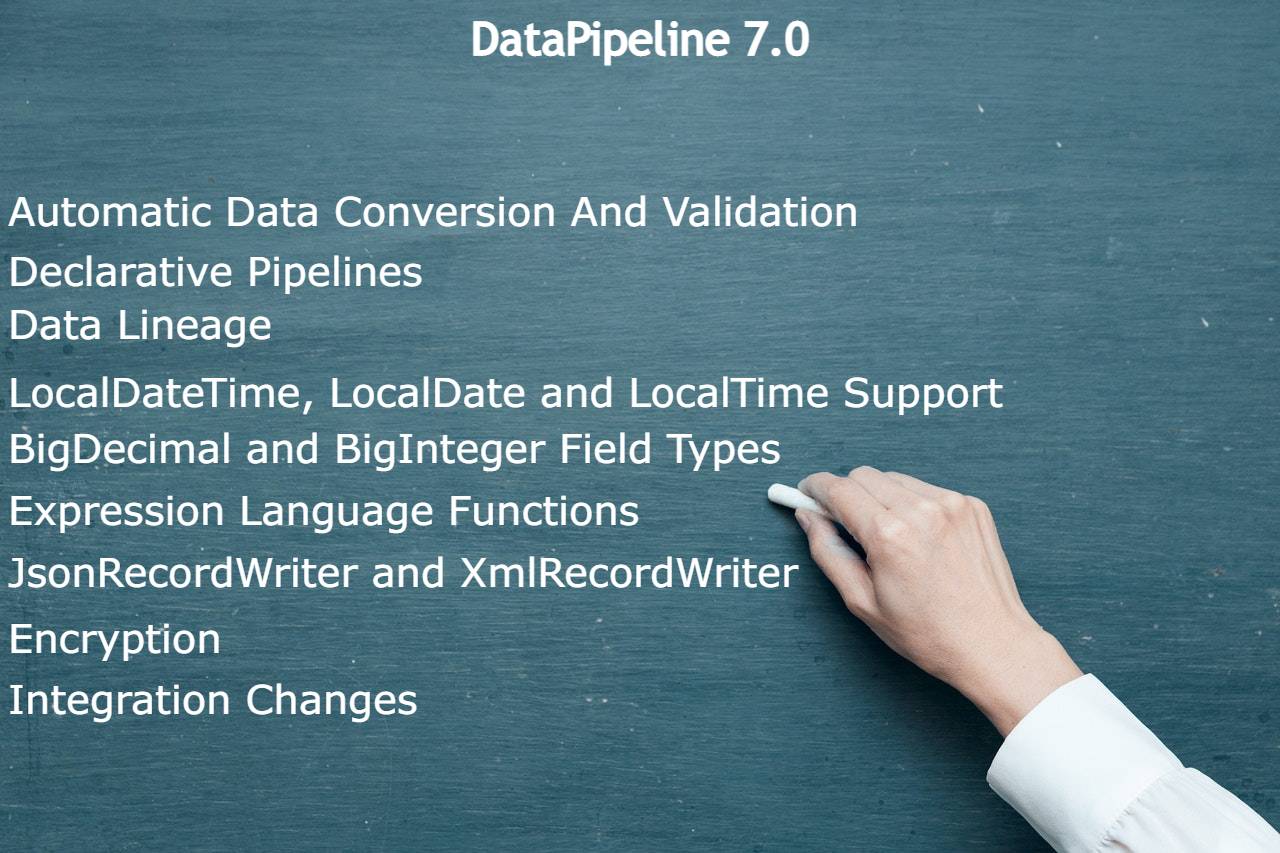
Welcome to the DataPipeline 7.0 release. Since our last update, the DataPipeline team has been hard at work adding more declarative components, new integrations, new transformations, and generally making the framework easier to use. Our goal is to make simple use-cases easy and complex ones less difficult to implement.